
 7026275757
 Chat with us
Synopsis
Table of Contents
Introduction
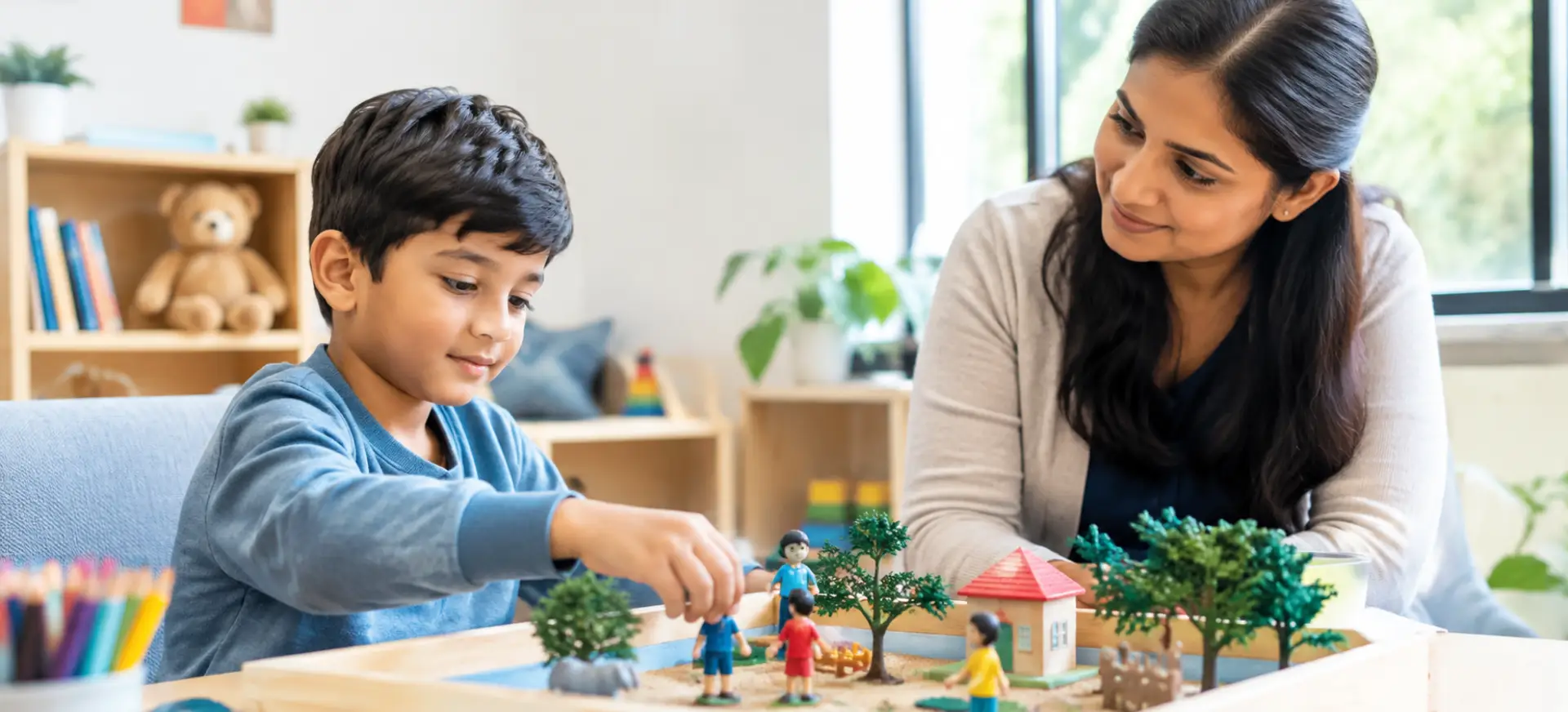
Children make sense of the world around them through their innate curiosity, which is best explored through playtime. It is the most natural way for children to express their thoughts, feelings, and experiences that may be difficult to put into words. Play therapy builds on this natural part of childhood to help address the emotional, behavioural, and developmental concerns in children. Through play, professional therapists incorporate mental health support for kids in a way that feels supportive and comfortable for them. Learn more about how play therapy works in this informative blog. Learn more about how play therapy works in this informative blog. Learn more about how play therapy works in this informative blog. Learn more about how play therapy works in this informative blog.
What is Play Therapy for Children?
Play therapy for children is a form of psychotherapy where a trained therapist uses the natural therapeutic quality of play to help children work through emotional and mental issues.
How Play Therapy Works for Children
Play therapy is not simply about making children play with different interactive toys. The therapist is actively involved in child-centred play therapy. They observe how the child communicates, responds to different situations, and engages with play. These observations guide the therapeutic process. Play therapy in child psychiatry focuses on:
- Creating a Safe Place
Children are more likely to express themselves when they feel secure and accepted. Thus, a therapist creates a predictable and encouraging environment, while respecting the child's boundaries to help them engage without fear of being judged or dismissed.
- Using Play Purposefully
Therapeutic play activities are selected with the child's developmental needs in mind. It can include drawing, storytelling, pretend play, puppets, and similar approaches that provide ways for children to express themselves in a way that is possible through conversations.
- Building a Trusting Relationship
How a child interacts with the therapist influences the outcome of play therapy. Hence, building a harmonious rapport is part of the process. Acceptance, empathy, active listening, and appropriate responses are some ways a healthy rapport is built.
- Offering An Outlet to Express
Gaining insights into the way a child thinks and working on their concerns is the central theme of play therapy. This is why it involves the use of pretend situations, characters, drawings, and objects to represent feelings and initiate dialogue.
- Supporting Mental and Emotional Development
As therapy progresses, children may develop emotional awareness, coping strategies, self-direction, and more flexible ways to respond to difficult experiences. The therapist provides the support tools that allow the child to open up and regulate feelings at a developmentally appropriate pace.
Types of Play Therapy for Children
Just as children differ in how they play and communicate, play therapy can take different forms, too. The therapist may use different techniques depending on the child's needs and desired outcomes.
- Directive Play Therapy
A therapist takes a hands-on approach in this type of therapy. They choose and structure the play activities according to the therapeutic goals. They guide the playtime through specific instructions based on how the child expresses themselves.
- Non-Directive Play Therapy
Non-directive therapy offers a more relaxed environment, with the child having more freedom in choosing how to use the available materials and play. The therapist takes on a supportive role without directing the child's actions or conversations.
- Child-Centred Play Therapy
Child-centred play therapy is a form of non-directive approach where the therapist provides acceptance, empathy, appropriate boundaries, and room for the child to lead the play and express themselves. The Association for Play Therapy describes child-centred play therapy as an evidence-based approach grounded in self-direction.
- Cognitive Behavioural Play Therapy
This type of play therapy adapts principles of cognitive behavioural therapy to suit a child's developmental level. Rather than relying only on verbal discussion, the therapist may use play to help the child understand the connection between thoughts, feelings, and behaviours.
- Group Play Therapy
Two or more children participate in group play therapy with a trained therapist. This format provides opportunities to work on behavioural concerns pertaining to social interaction with peers.
- Gestalt Play Therapy
Gestalt play therapy focuses on helping children develop greater awareness of their feelings, experiences, and actions in the present moment. Play and creative activities are primarily used to help the child explore what they are experiencing and build awareness of their own responses.
- Filial Play Therapy
Filial play therapy involves parents or caregivers in the therapeutic process. They are taught specific play-based therapy skills that they can use with their child, under the therapist's professional guidance and supervision. It helps build a stronger parent-child relationship and helps them better cater to their child's emotional or behavioural needs.
Conditions Supported by Play Therapy
Play therapy for children is known to be effective in supporting children with emotional, behavioural, and psychological difficulties. Some of the conditions it helps deal with include:
- Anxiety and stress: Play-based approaches can help children express worries and work through stressful situations. This, in turn, can help in reducing anxiety symptoms.
- Emotional and behavioural difficulties: Inability to regulate emotions or adjust behaviour is a common concern in children. Play therapy can provide means to work on these areas.
- Post-Traumatic Stress Disorder: Children who have experienced traumatic events may find it difficult to describe how it affects them. Child-centred play therapy has shown potential in helping children cope and build self-concept outside of the traumatic event.
- Depressive symptoms: Children may also go through depressive symptoms due to bullying, unstable home environment, divorced parents, etc. Play therapy can work alongside other modalities to help with childhood depression.
- Neurodevelopmental disorders: Play therapy can support communication and social interaction skills in children with neurodevelopmental conditions such as autism, ADHD, and other intellectual disabilities.
- Physical or emotional abuse: Play therapy offers a safe environment for children to express their feelings associated with abuse. Therapists guide the sessions with the needed sensitivity and empathy to help the affected child cope.
- Emotional challenges of long-term treatment: Chronic health conditions lead to a significant emotional toll on children and adults alike. Repeated hospital visits and prolonged treatment can be emotionally demanding. Play gives them an age-appropriate outlet to process these experiences and express their fear or frustration.
Benefits of Play Therapy for Children
Play therapy for children leads to improvement in multiple areas based on how the children respond to the therapeutic approaches. The key benefits include:
- Builds Self-concept
During play, children make choices, explore their abilities, and experience a sense of competence. Research on child-centred therapy has reported improvements in self-concept as children learn more about themselves.
- Teaches Empathy and Respect
Through pretend play and group therapy, children can explore different perspectives and practise responding to others with greater understanding.
- Improves Emotional Wellbeing
Play provides a developmentally appropriate way for children to process and communicate difficult emotions.
- Helps with Social Skills
Group play therapy also helps children practise communication, cooperation, turn-taking, and responding to social cues. These skills help them interact better in social settings.
- Strengthens Bonding
Approaches such as filial play therapy can guide children and parents or caregivers to respond more sensitively to their child's emotional needs and support a stronger relationship.
- Develops Coping Strategies
With appropriate play-based guidance, children can develop healthy ways to manage fear, frustration, or distress. Over time, these responses become second nature.
What Happens in a Play Therapy Session?
Play therapy sessions are adapted to the child's specific needs. The process involves:
- Initial assessment where the therapist interviews the parent or caregiver along with the child. They also consider the developmental history of the child.
- Core concerns are identified, and goals are set.
- A typical session lasts 35-40 minutes, during which the child is encouraged to engage in guided play activities.
- The therapist observes the child's communication and behaviour and guides with necessary intervention.
- Parents or caregivers may receive feedback or guidance and may sometimes participate directly, based on the therapy technique.
- Progress is reviewed regularly and required adjustments are made.
Helping Children Cope, Connect and Grow
Play therapy offers an interactive and unassuming way to help children work through emotional and behavioural concerns. A child psychologist trained in both structured and non-directive approaches can determine what may be appropriate based on the child's needs. You can find qualified professionals in multi-speciality mental health hospitals. Maarga Mindcare is one such holistic healthcare centre with a team of child and adolescent psychologists offering personalised support.
FAQs
How does play therapy help children emotionally?
It gives children a developmentally appropriate way to express their feelings and explore experiences.
At what age is play therapy effective?
It is commonly used with children aged between 3 and 12 years, depending on their concerns and ability to engage.
Can play therapy help children with anxiety or trauma?
Yes, it can give them an outlet to understand their stressful experience and build coping mechanisms.
Is play therapy the same as letting the child play?
No, it involves a trained professional who uses play intentionally to understand the child and work towards specific therapeutic goals.
Can play therapy be used alongside other treatments?
Yes, play therapy works best as a conjunctive treatment to support other mental health approaches.
Disclaimer:
The information provided on this page is for educational purposes only and does not replace professional medical consultation. Insomnia treatment results vary from person to person. Please consult a specialist psychiatrist or psychologist for personalised care. If you or your loved one is struggling with Insomnia, reach out to Maarga Mind Care – a trusted psychiatric hospital in India. Our experts can help you start your journey to recovery.